
Archival Resistance Lab
Bridging history and action for a democratic Serbia
The Archival Resistance Lab is a transnational initiative that started on a cold winter day in 2024, dedicated to addressing the “stalled democratic transition” in Serbia. We bridge the gap between the Serbian diaspora and students back home, transforming historical memory into a live tool for civic agency.
Our Mission
We reactivate the visual memory of the 1996–2000 protests to provide a “historical literacy” blueprint for the upcoming 2026-27 election cycle, and in the afterwards period of democratic institutions rebuilding. By curating “exiled” archives alongside contemporary activism, we build a social infrastructure that empowers citizens to demand truth and accountability.
Why Now?
Every protest, every demand for justice, is met with a mirror image designed to ridicule and neutralize dissent. Citizens mourning the dead are mocked by government loyalists, cultural monuments are demolished in the name of “national interest”, corruption is legalized through tailor‑made laws. Serbia’s institutions no longer serve the public, they serve a ruling elite desperate to cling to power.
Full text Skyscrapers Rise, Memory Falls: Belgrade’s Corruption Skyline, by Miloje Savić available at:
https://medium.com/@miloje.savic/skyscrapers-rise-memory-falls-belgrades-corruption-skyline-c3fe6a296e5c: Archival Resistance Lab
The 2003 assassination of Prime Minister Zoran Đinđić created a democratic fracture that forced much of Serbia’s intellectual energy into exile. We use insurgent spatial archiving to “re-patriate” this lost history, repairing national identity and redefining transitional justice for a new generation.
Core Pillars
Truth-Finding & Memory
We collect private photo archives from the post-2003 diaspora and contributors living in Serbia. These primary sources serve as a vital counter-narrative to the state-sponsored historical revisionism currently seen in Serbia.
In a region where post-communist transitions remain unfinished and civic institutions under constant strain, Serbia’s student-led uprising in late 2024 has reignited an old fire. Marching under the slogan “Belgrade is the world again,” young protesters have reawakened memories of earlier generational awakenings: 1968, 1996–97 and exposed the fragile scaffolding of a system many believed to be immovable.
Full text Echoes of the Past: Serbia’s Student Protests and the Recurring Struggle for Democratic Integrity, by Miloje Savić available at:
https://medium.com/@miloje.savic/echoes-of-the-past-serbias-student-protests-and-the-recurring-struggle-for-democratic-integrity-9b1c6135fb54: Archival Resistance Lab
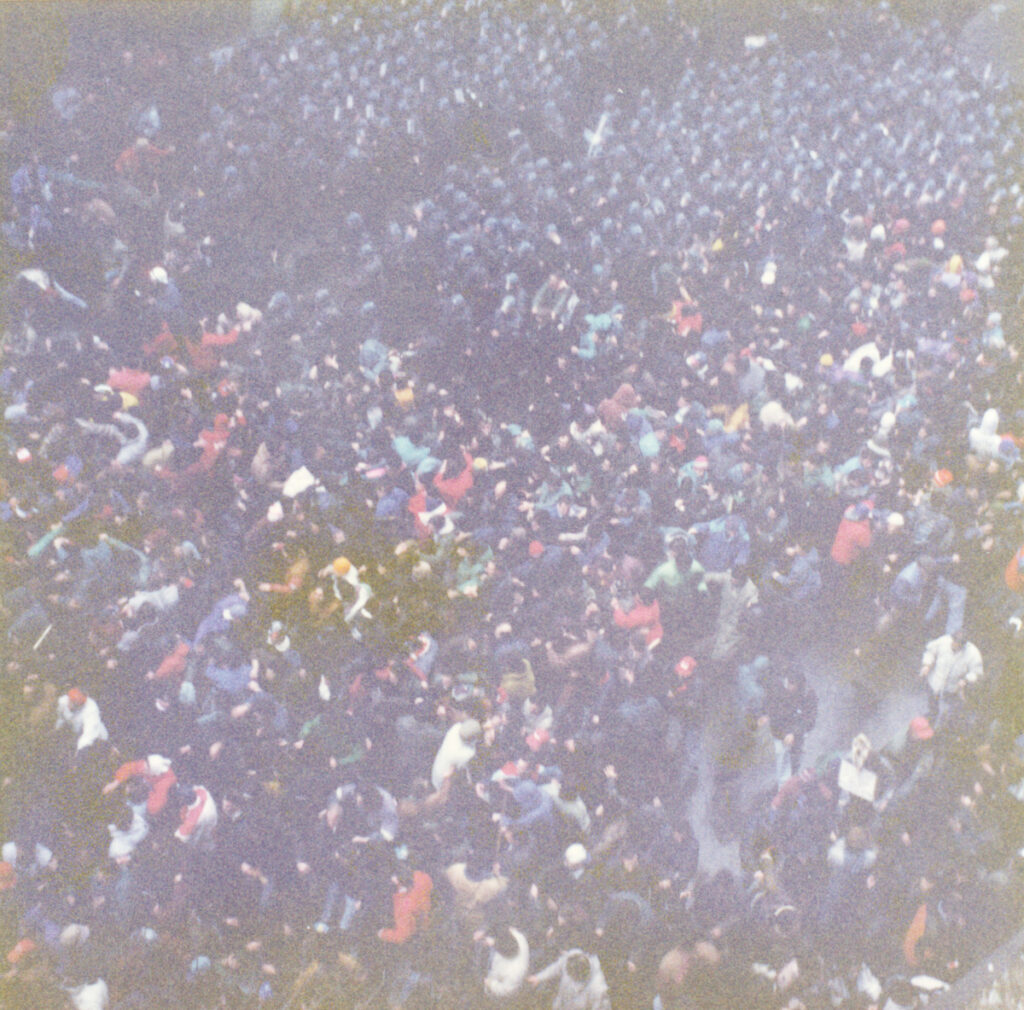
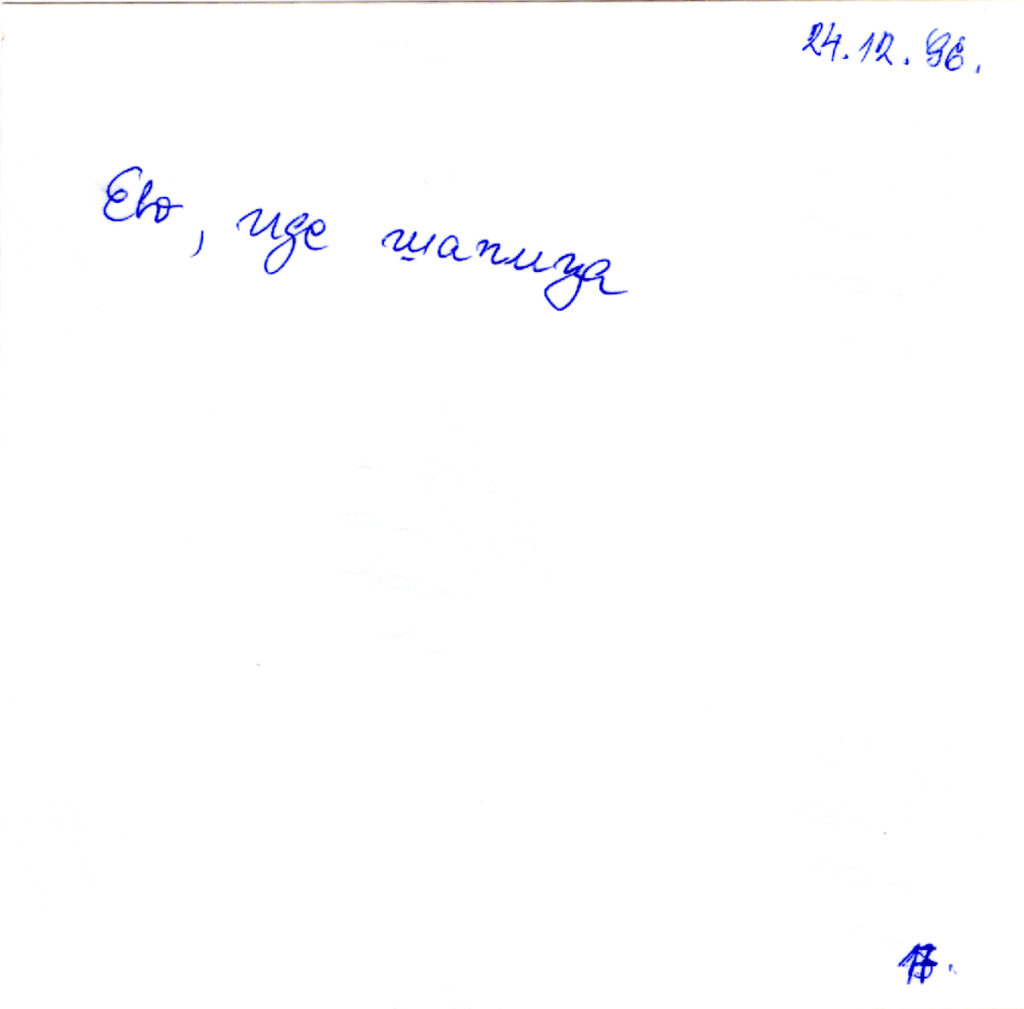
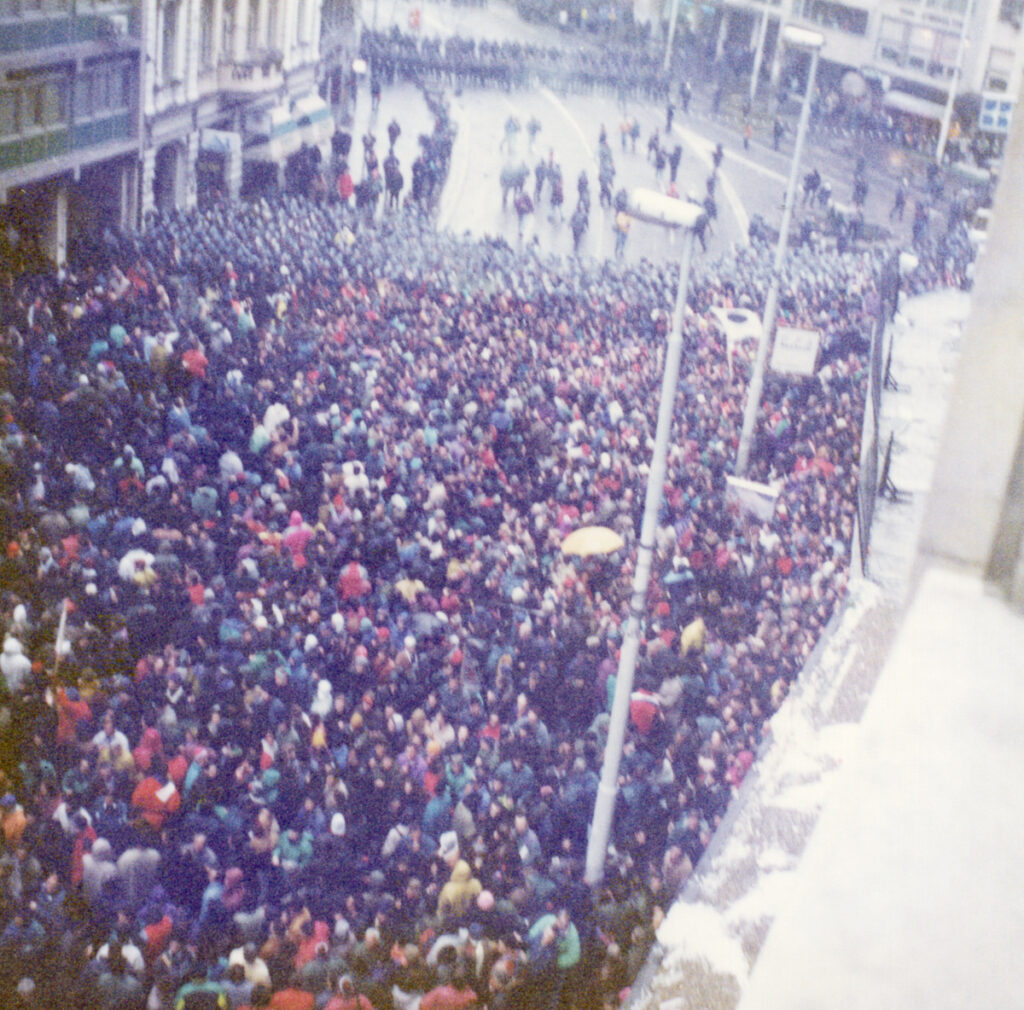
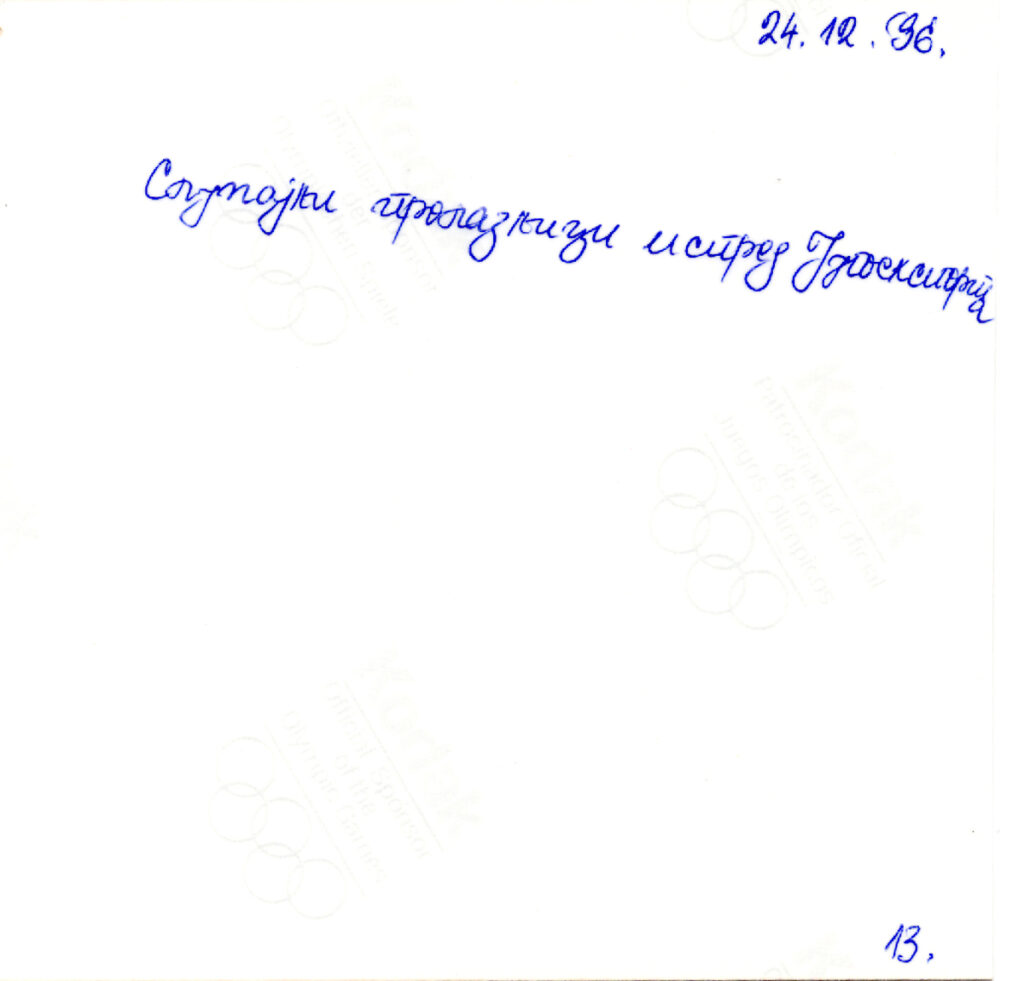
Archive photos from student protests 1996-97 (©S.A.). Confrontation at Kolarčeva street on 24 December 1996.
Social Repair
By building a Transnational Memory Infrastructure, we connect the diaspora with those in Serbia. We acknowledge the 2003 rupture as a collective, ongoing trauma underscored by recent events like the illegal use of sonic weapons against peaceful vigils in Belgrade on March 15, 2025.
The moment an illegal sonic weapon hit a silent vigil in Belgrade.
Footage from the March 15, 2025, ’15th for 15′ vigil in Belgrade (Student Cultural Center crossroad). At 19:11, an unexplained ‘sonic wave’ broke the 15-minute silence, triggering the stampede seen in the final 8 seconds that knocked me down and broke the recording. This incident led to a landmark interim measure by the European Court of Human Rights, which ordered Serbia to cease the use of sonic devices for crowd control. Despite over 4,000 testimonies of physical injury and the state later admitting it owns 16 LRAD (Long Range Acoustic Devices) devices, domestic prosecution remains in a ‘pre-investigation’ phase with no accountability to date.
The evidence was irrefutable
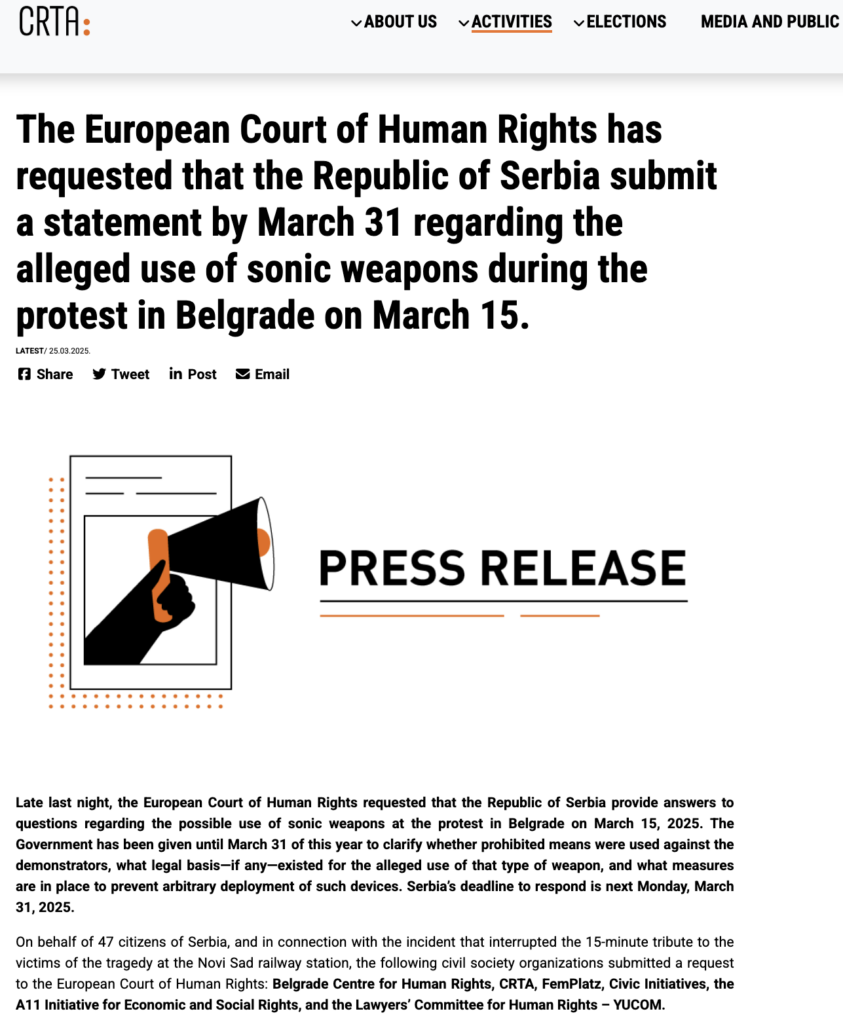
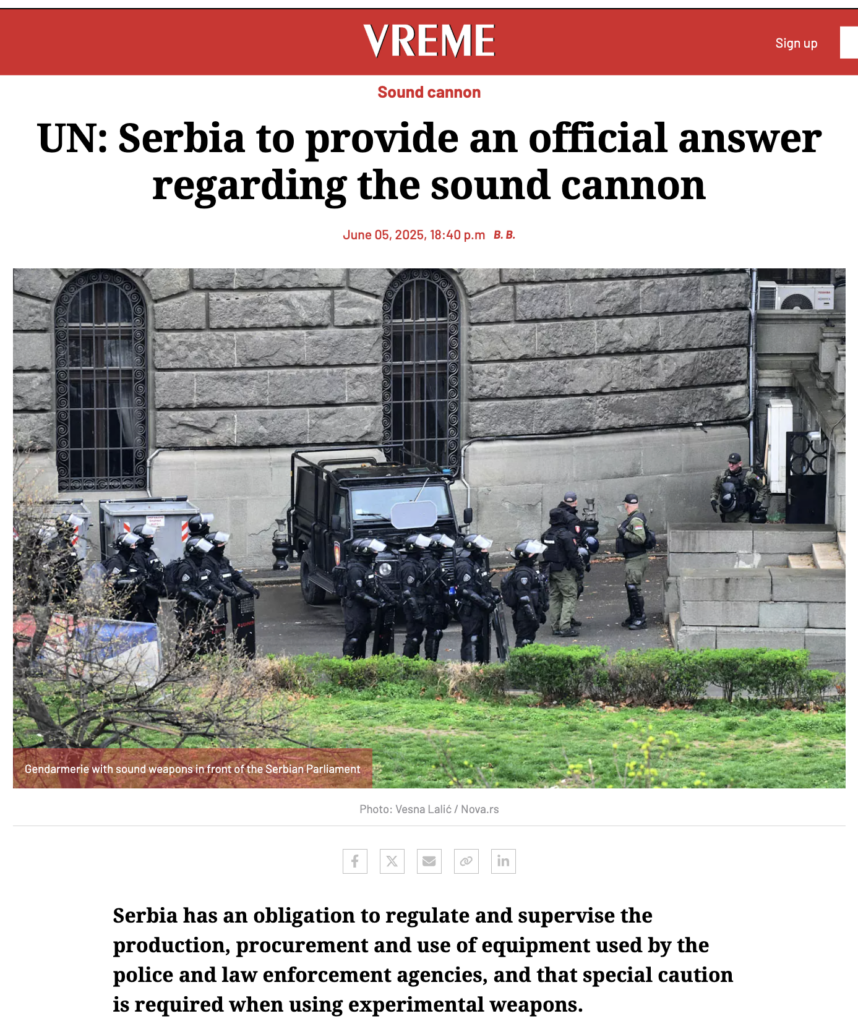
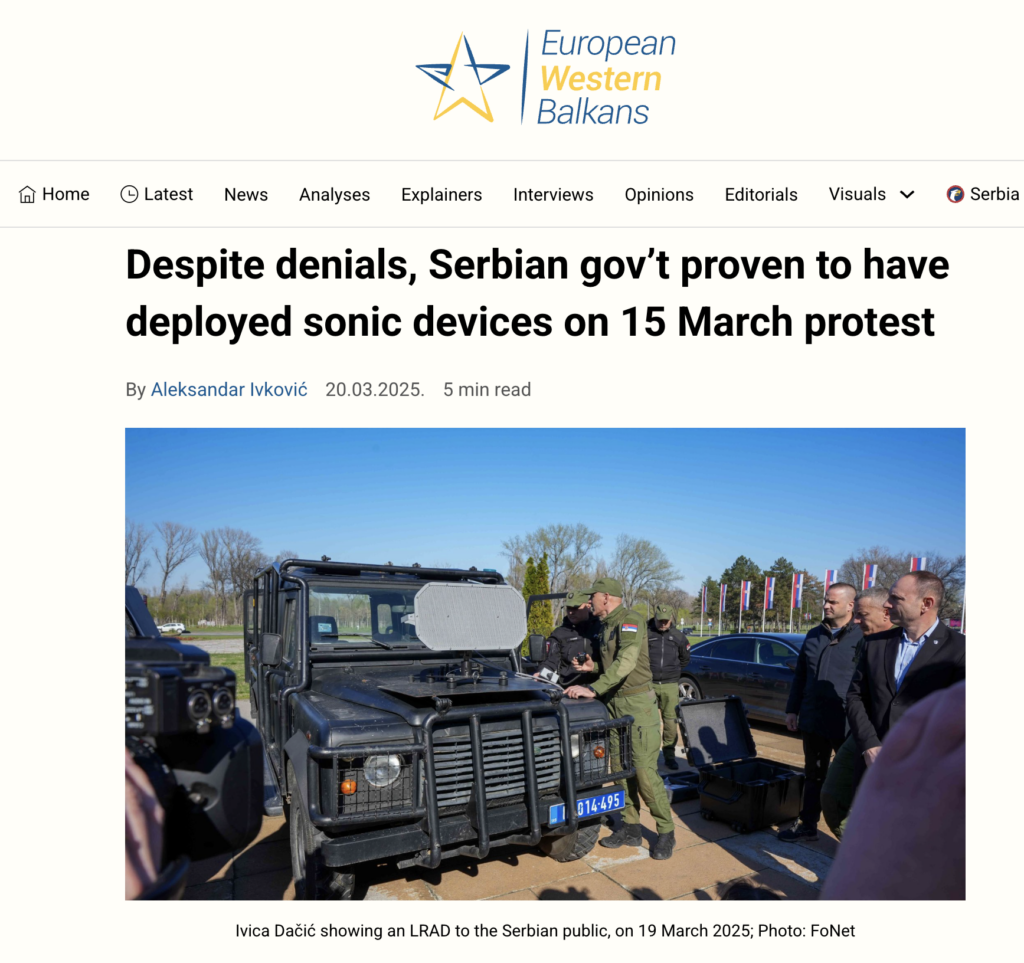
Published evidence on illegal sonic weapon use on protesters in Belgrade on March 15, 2025.
Key Facts
- The Vigil “15 for 15”: On March 15, 2025, an estimated 275,000 to 325,000 people, with some reports suggesting up to 800,000, gathered in Belgrade for what is considered the largest protest in modern Serbian history.
- The Timing: A 15-minute silent vigil was planned to start at 19:00 in honor of the 15 people killed during the 2024 Novi Sad railway station canopy collapse.
- The “Sonic Wave”: Witnesses and various reports describe an “unexplained noise” or “sonic boom” that broke the silence around the 11th minute (approx. 19:11).
- The Reaction: The sound triggered a mass stampede as thousands of people panicked and fled toward the sidewalks.
- The Device: Protesters and human rights organizations, such as Scholars at Risk, alleged the government used a Long Range Acoustic Device (LRAD) or “sonic cannon”. While the government denied its use, independent forensic researchers and investigative journalists confirmed the state had previously purchased such devices.
- European Court of Human Rights (ECtHR) Intervention: In April 2025, the ECtHR issued an interim measure ordering the Serbian government to prevent any future use of sonic devices for crowd control, noting that such weapons are illegal for this purpose in Serbia.
- Domestic Prosecution: While the Serbian Prosecutor’s Office opened a “pre-investigation” into the incident, legal experts from the Belgrade Centre for Human Rights have criticized the authorities’ passive stance. As of early 2026, no police officers have been charged, though over 170 individuals were questioned.
- Government Counter-Litigation: Instead of investigating police conduct, the government announced legal action against those it accused of spreading “disinformation” regarding the sonic weapon.
- Official Disclosure of Equipment: Under extreme public pressure, the Ministry of Internal Affairs eventually admitted to possessing 16 Long Range Acoustic Devices (LRADs), despite initial denials that such equipment was in their arsenal.
- Civil Society Evidence: NGOs like CRTA collected more than 4,000 testimonies from participants who reported physical symptoms such as nausea, severe headaches, and disorientation consistent with acoustic weapon exposure
The scandals are pilling up
A heritage scandal built on falsified documents and political pressure is now testing Europe’s resolve — and the diaspora is forcing Brussels to face reality.
Original article Effacer, rembobiner, recommencer : les ruines de la Serbie révèlent un régime hors de contrôle, by Miloje Savić available at Le Courrier des Balkans:
https://www.courrierdesbalkans.fr/Opinion-Effacer-rembobiner-recommencer-les-ruines-de-la-Serbie-revelent-un: Archival Resistance Lab
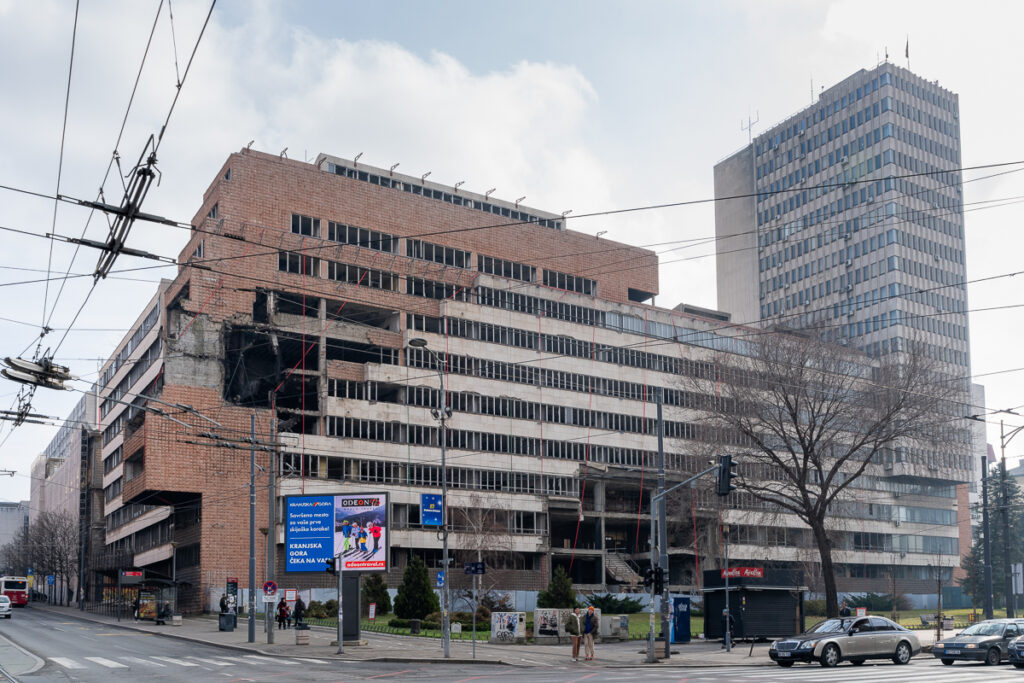
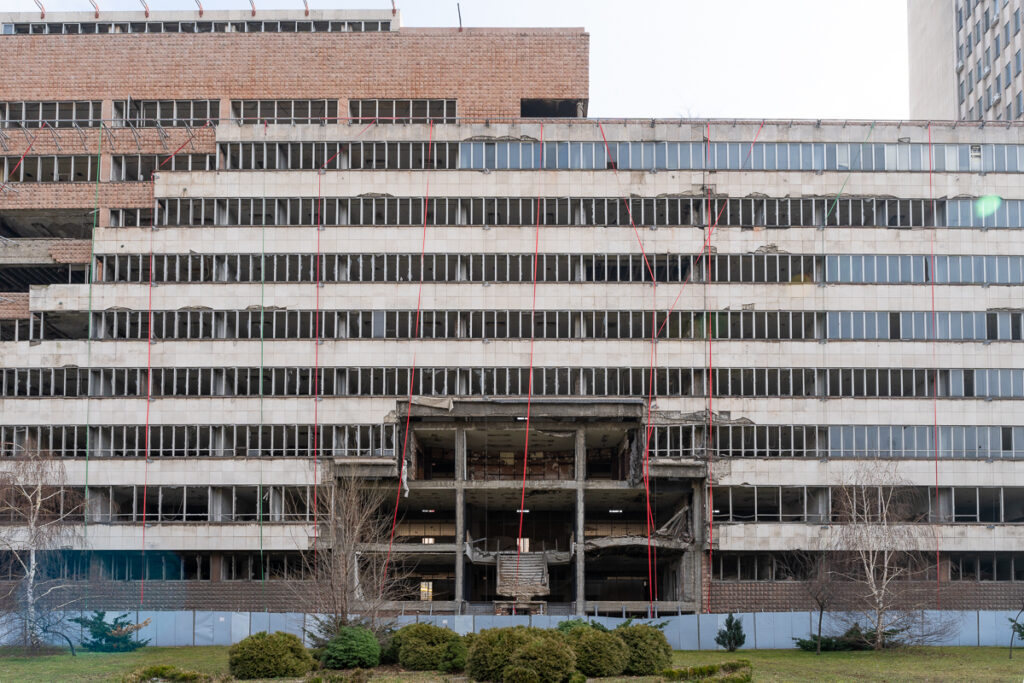
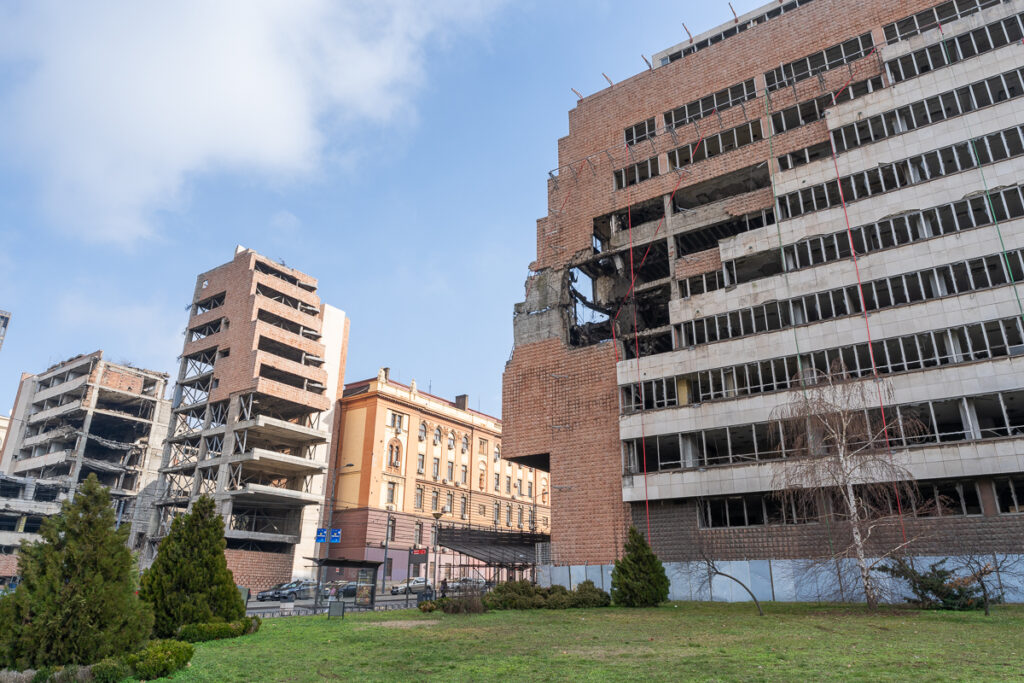
The ruins of the General Staff Complex (2026). What remains when memory is razed and profit towers over justice?
Accountability
We project these archives onto state and civic architecture in Belgrade and Brussels. By placing memory back into “concrete” spaces, we provide students and citizens with the tools to hold current institutions accountable.
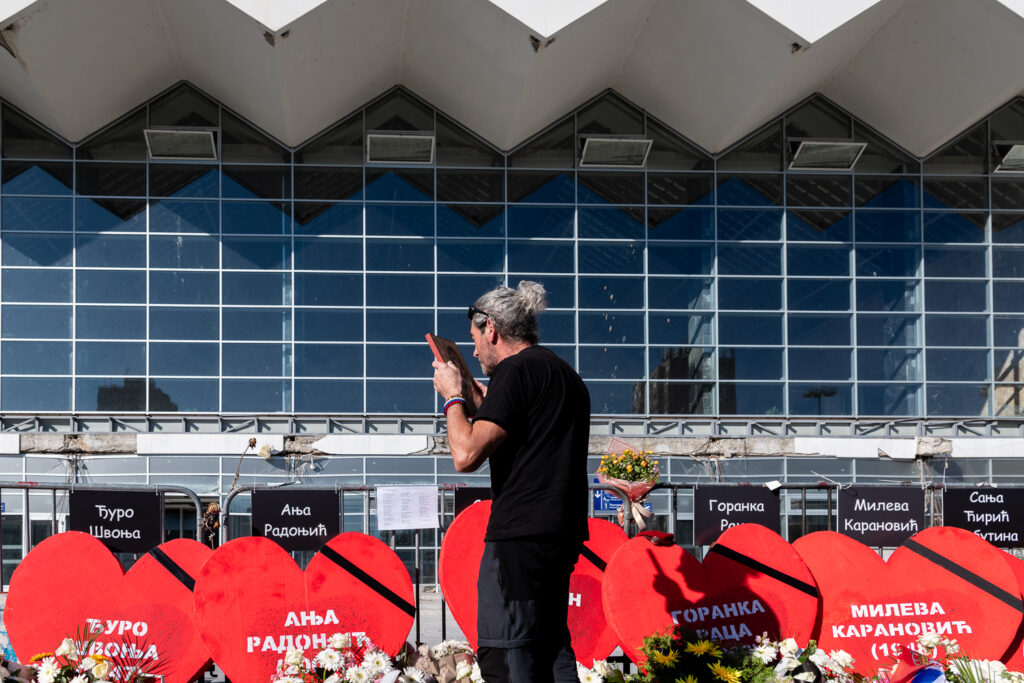
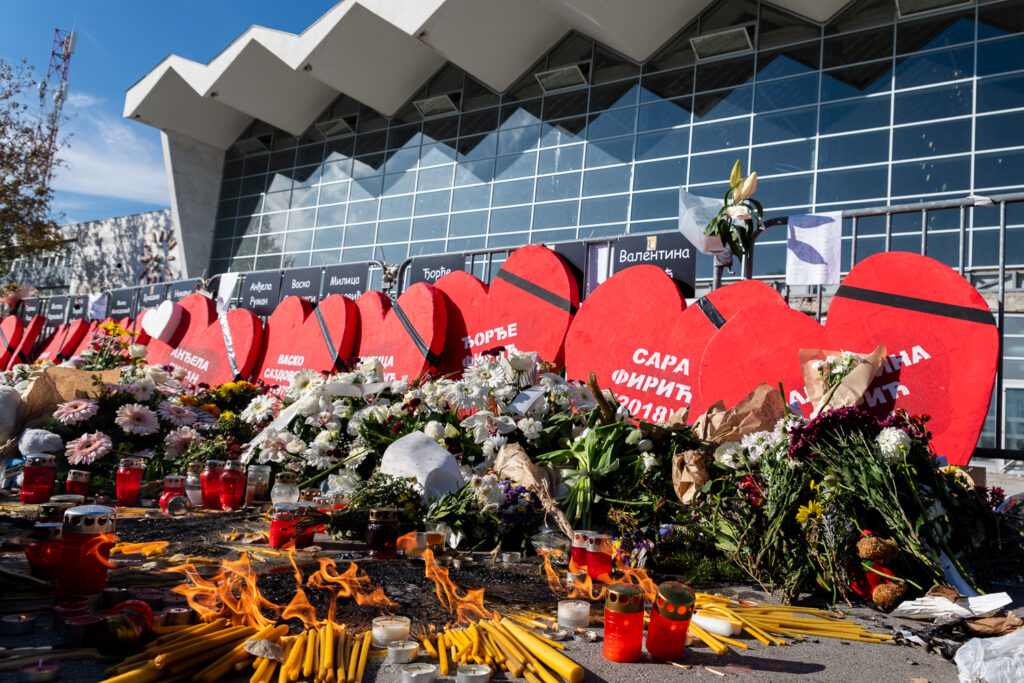
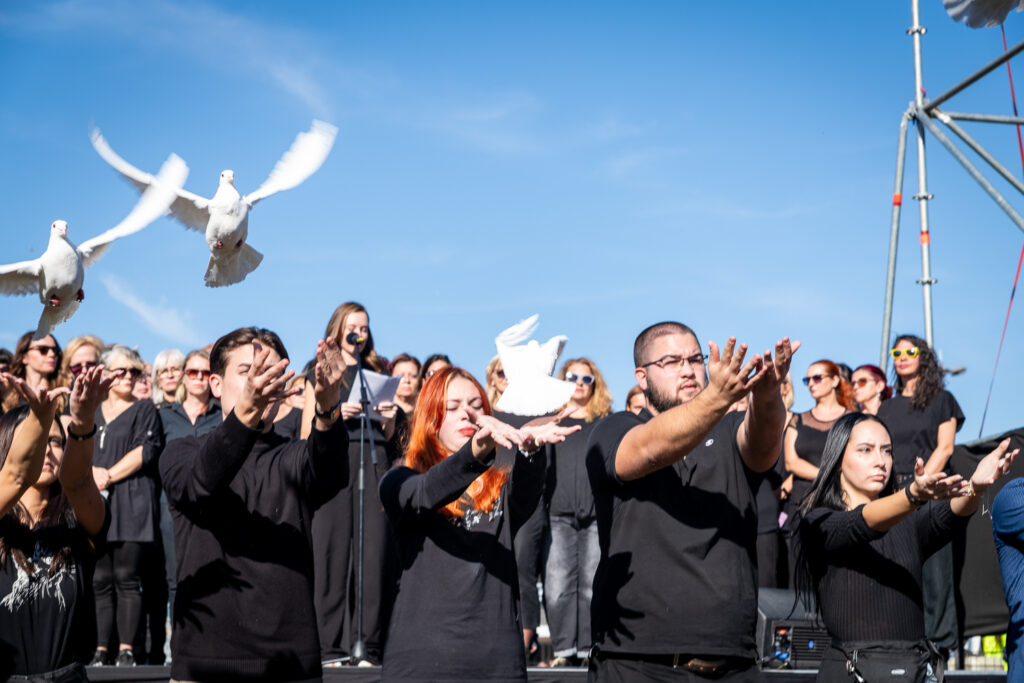
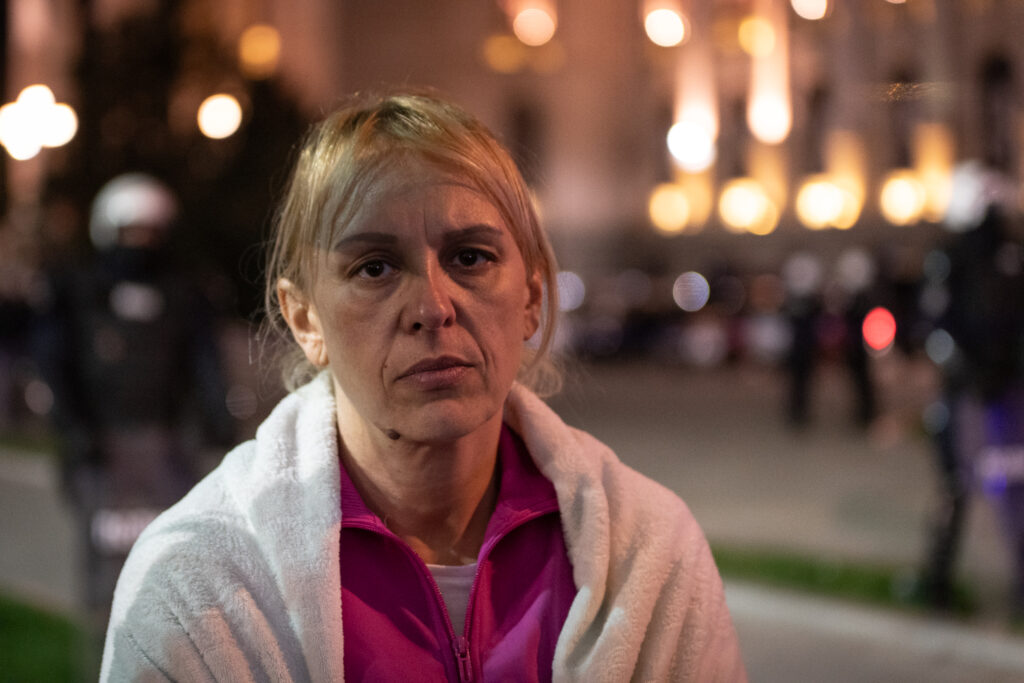
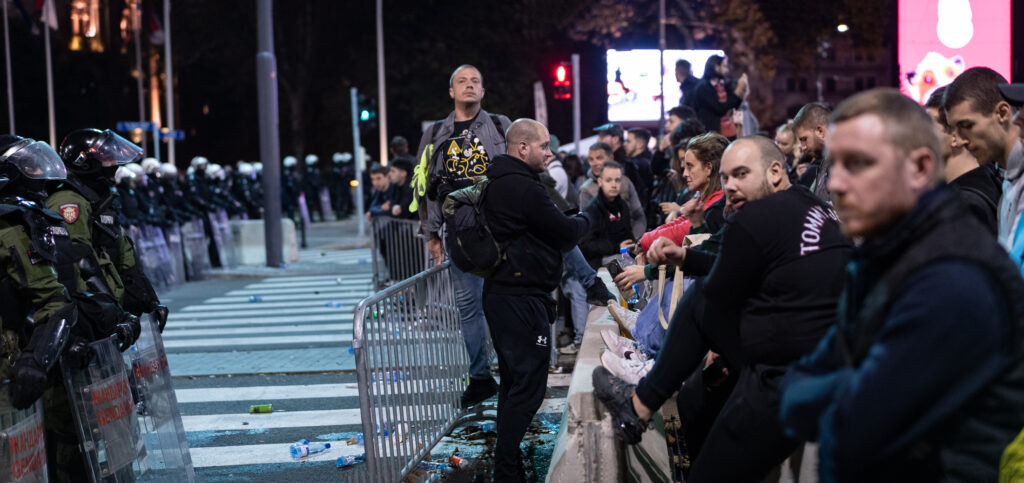
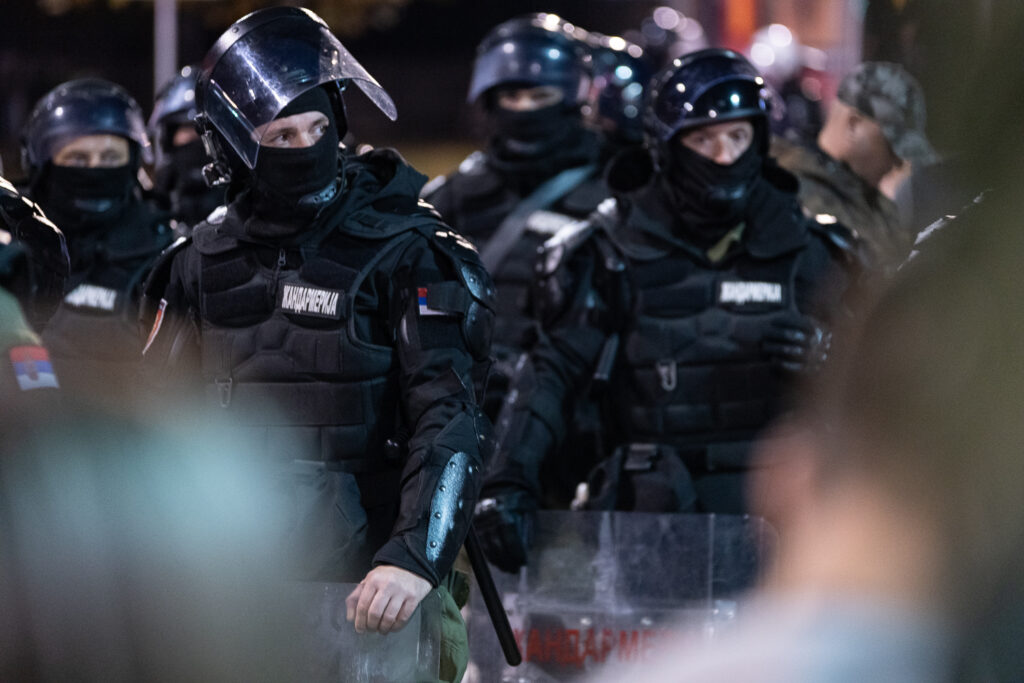
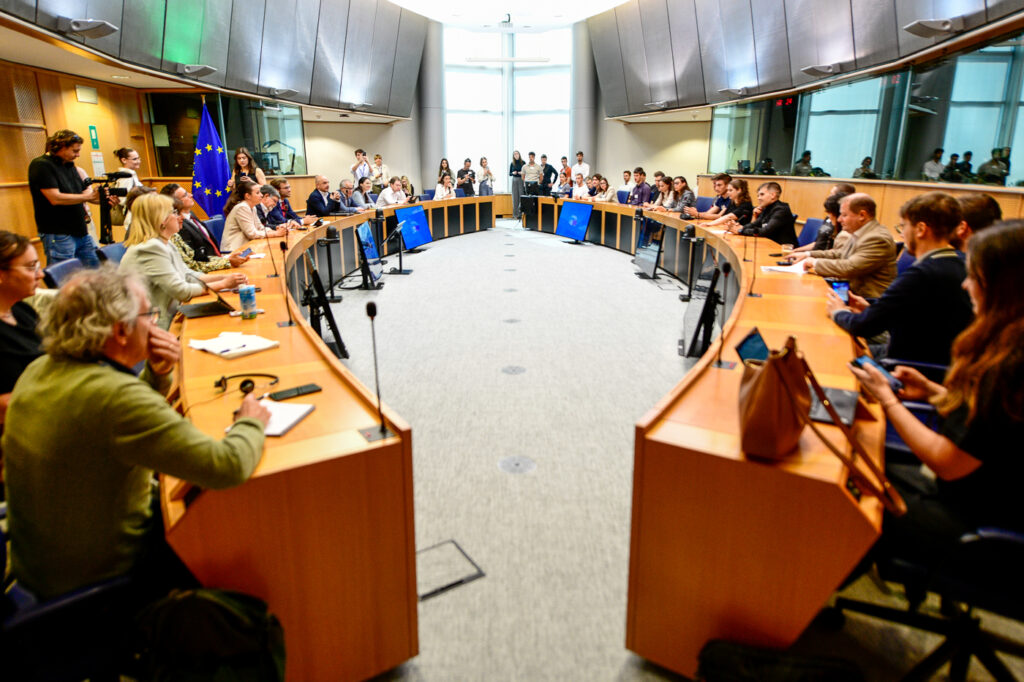
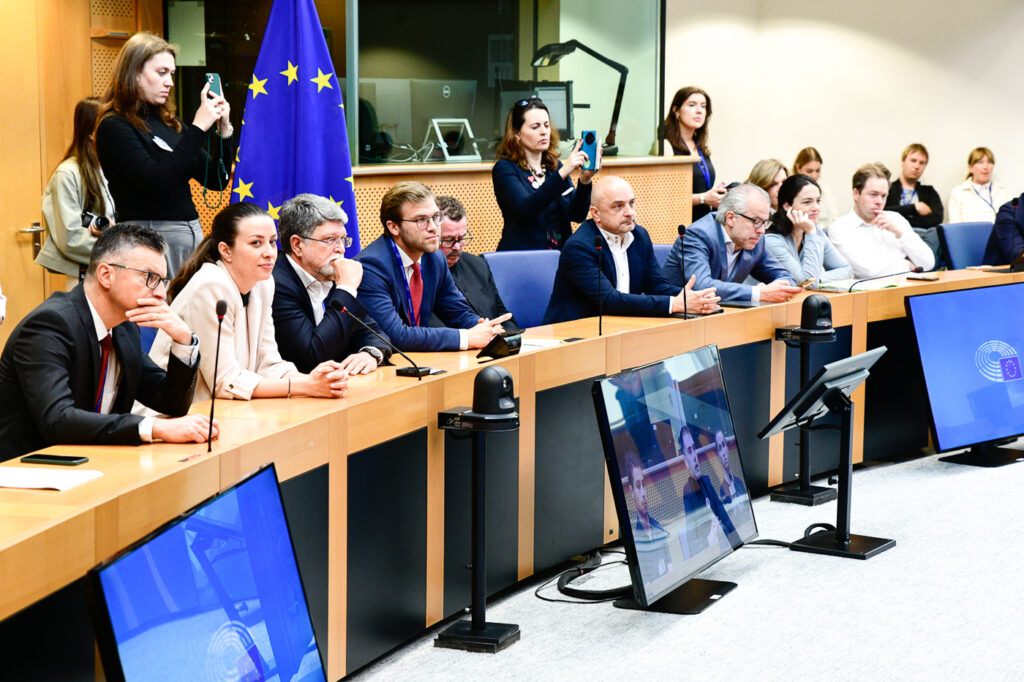
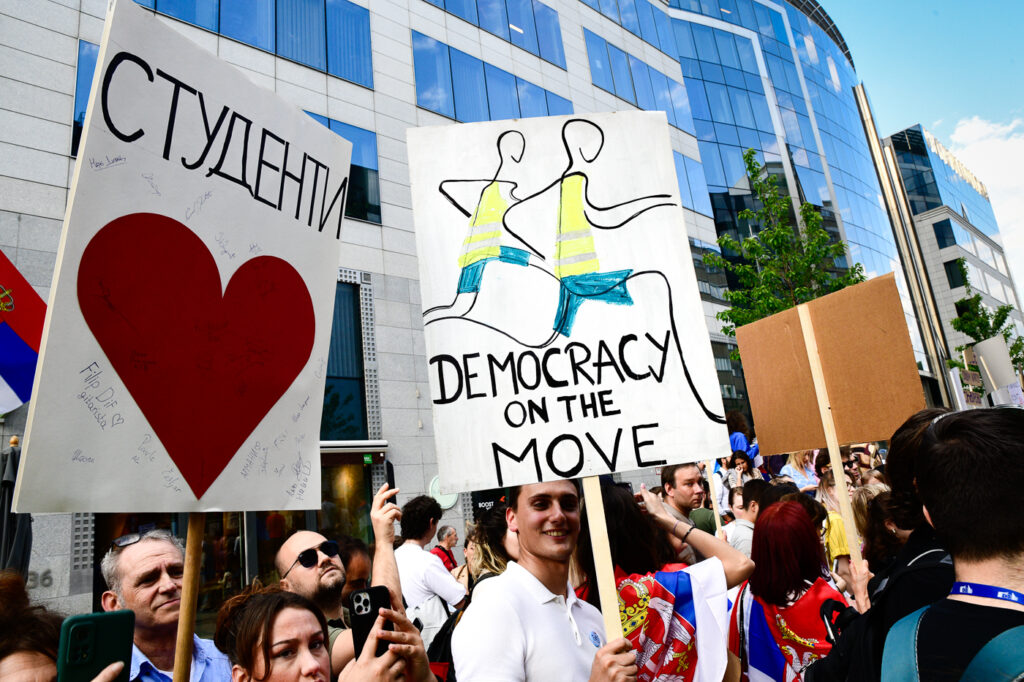
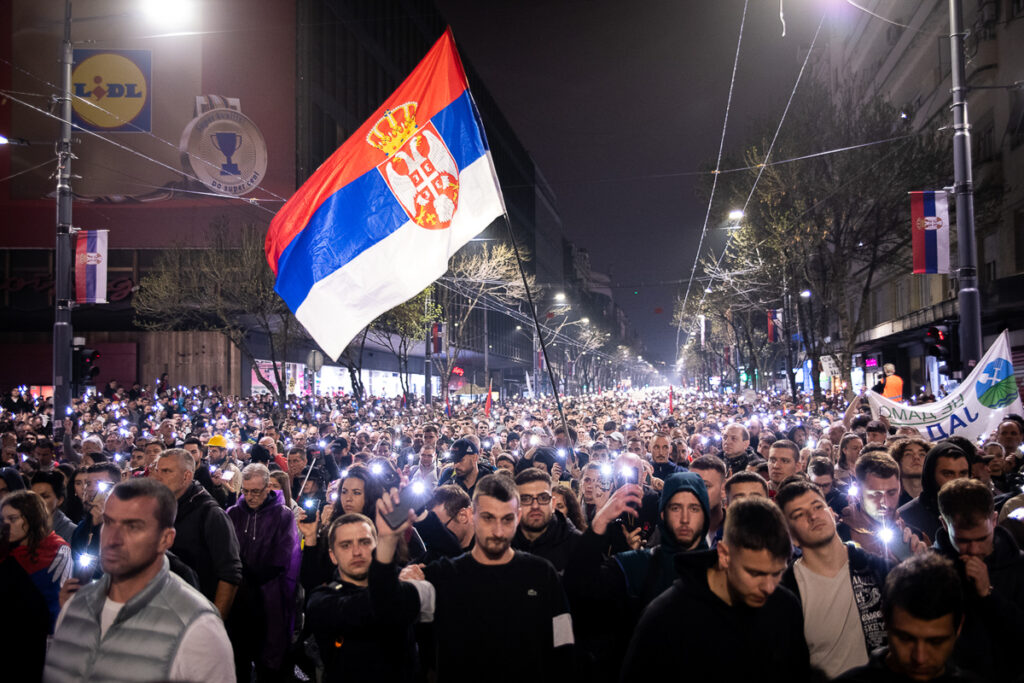
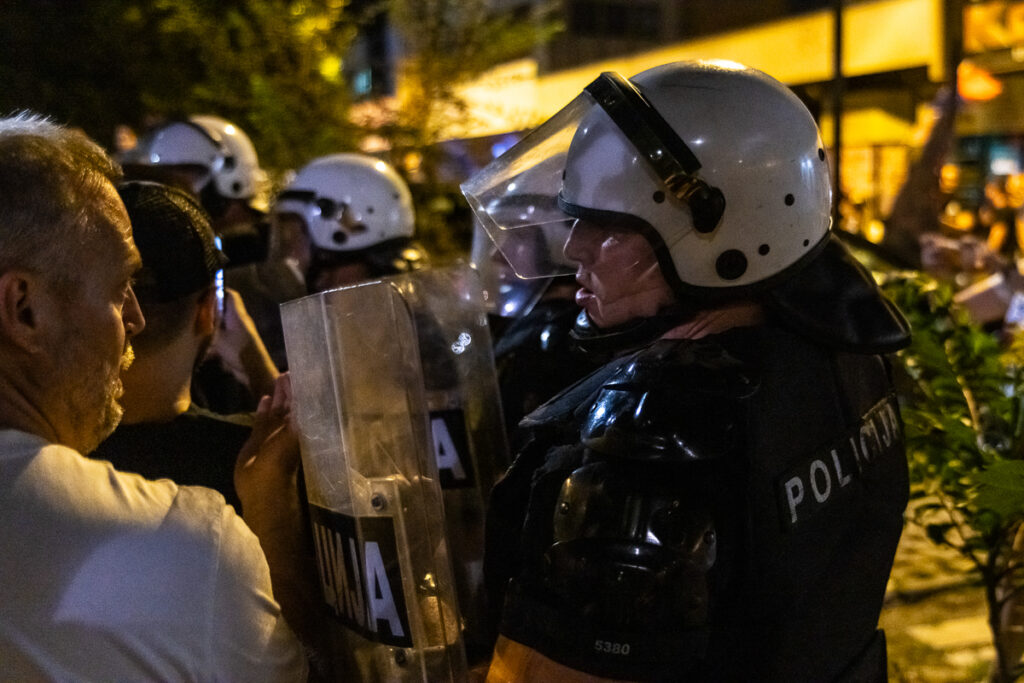
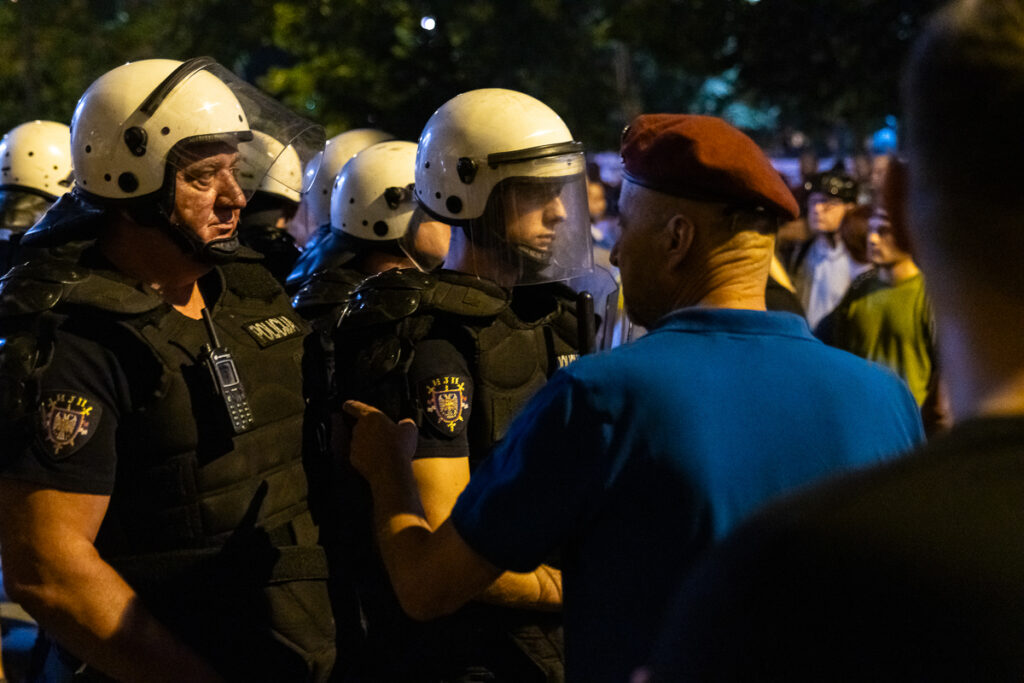
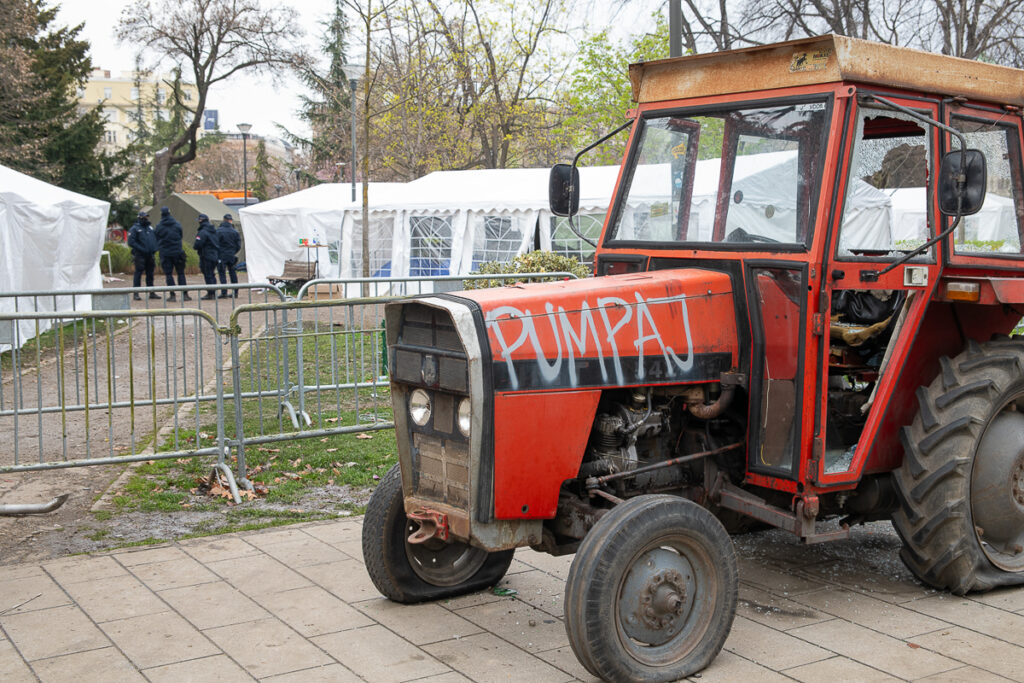
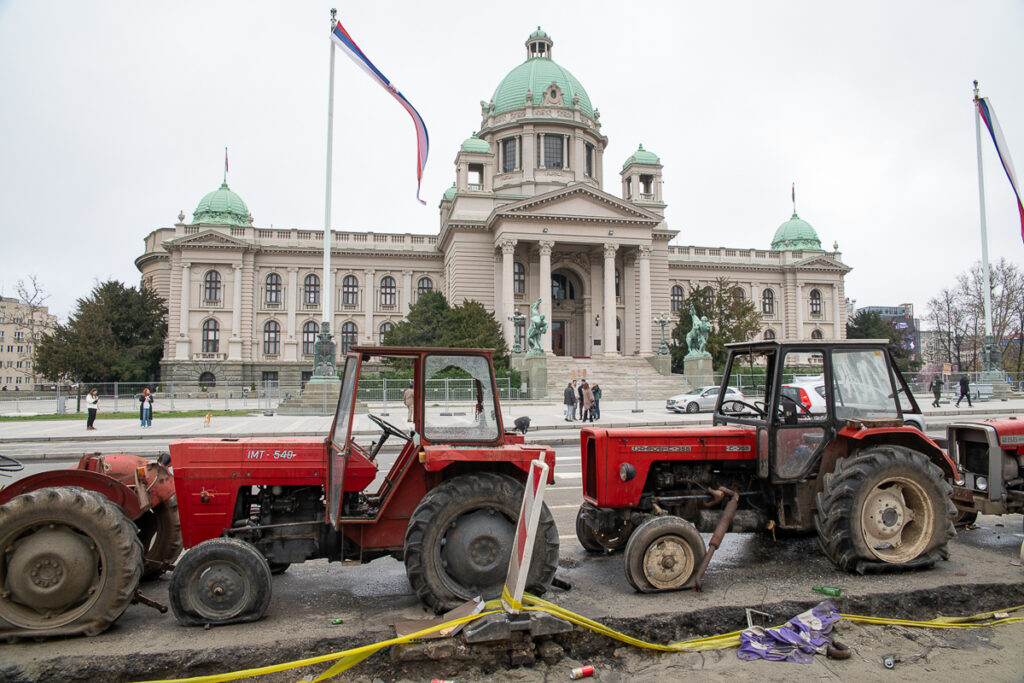
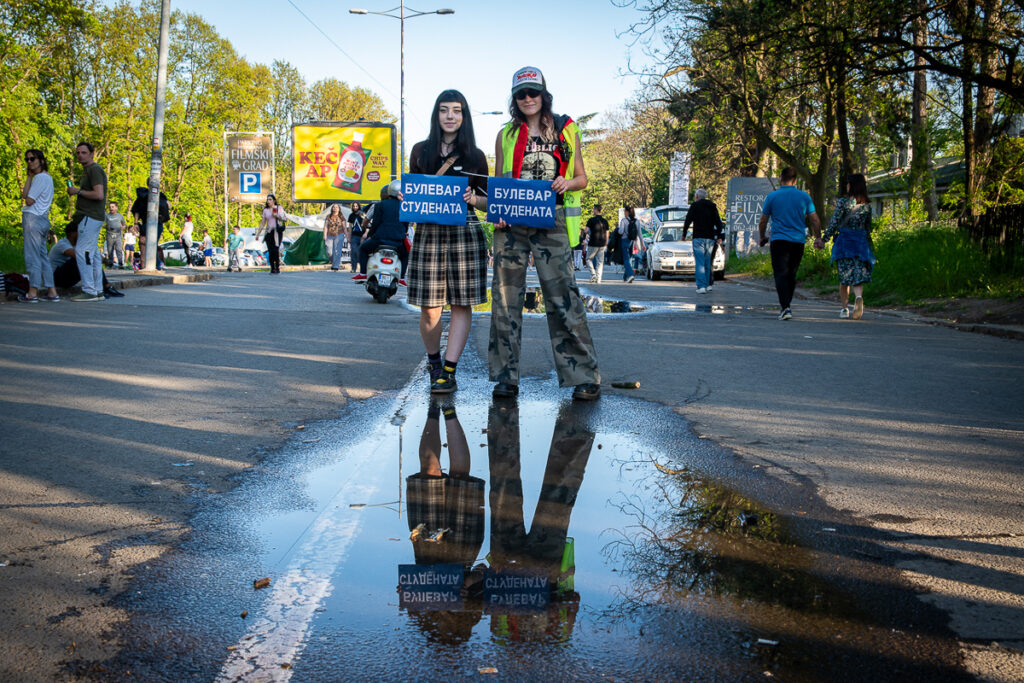
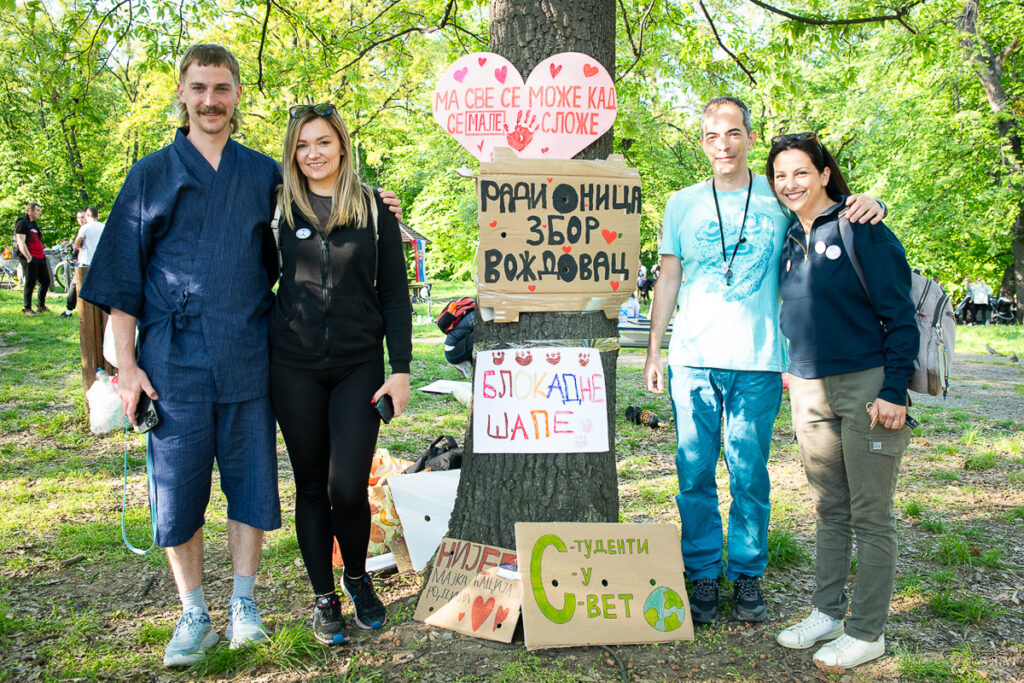
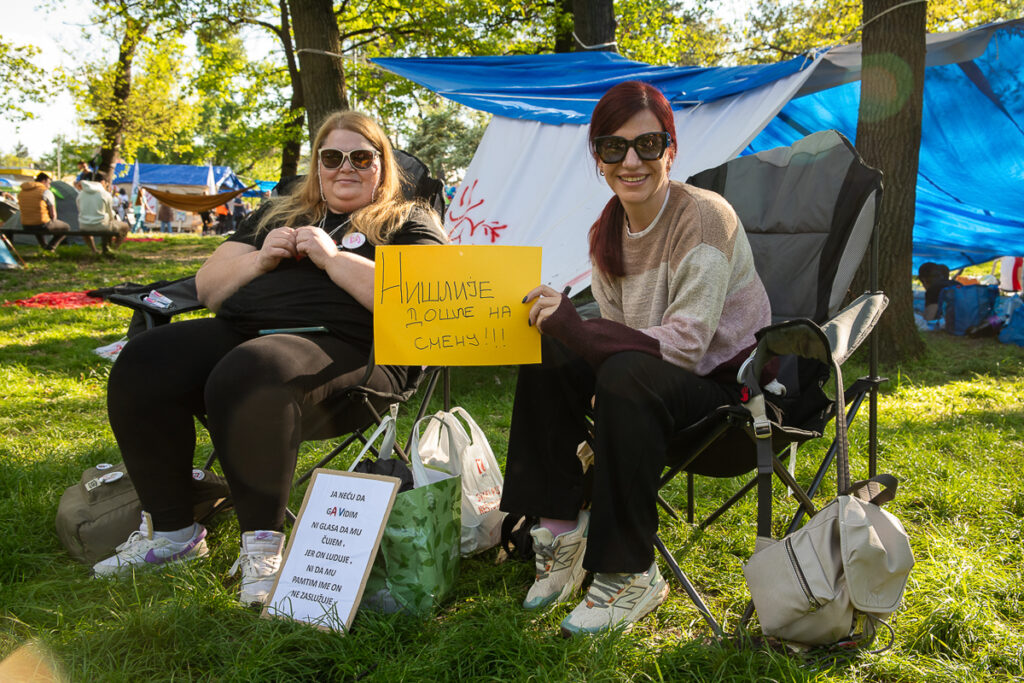
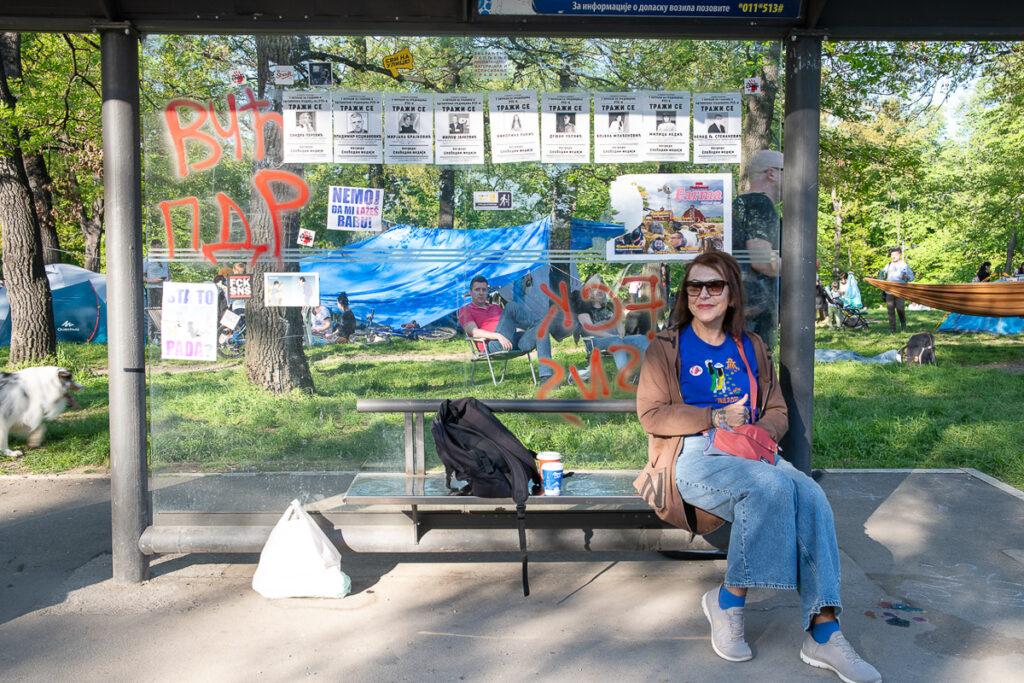
A year after the collapse, Serbia remains gripped by protests led by university students and citizens demanding accountability. Investigations into the accident revealed significant corruption and safety standard violations in Novi Sad station’s reconstruction. Despite mass public pressure that led to the resignation of former Prime Minister Miloš Vučević, no high-ranking officials have been held accountable. Many believe the resignation was a superficial gesture.…
Full text One defiant mother’s quest for justice in Serbia, by Miloje Savić available at:
https://medium.com/@miloje.savic/one-defiant-mothers-quest-for-justice-in-serbia-ce384ee82b18: Archival Resistance Lab
Location
We operate as a transnational bridge, connecting the Serbian diaspora in Belgium with students and activists in Serbia.
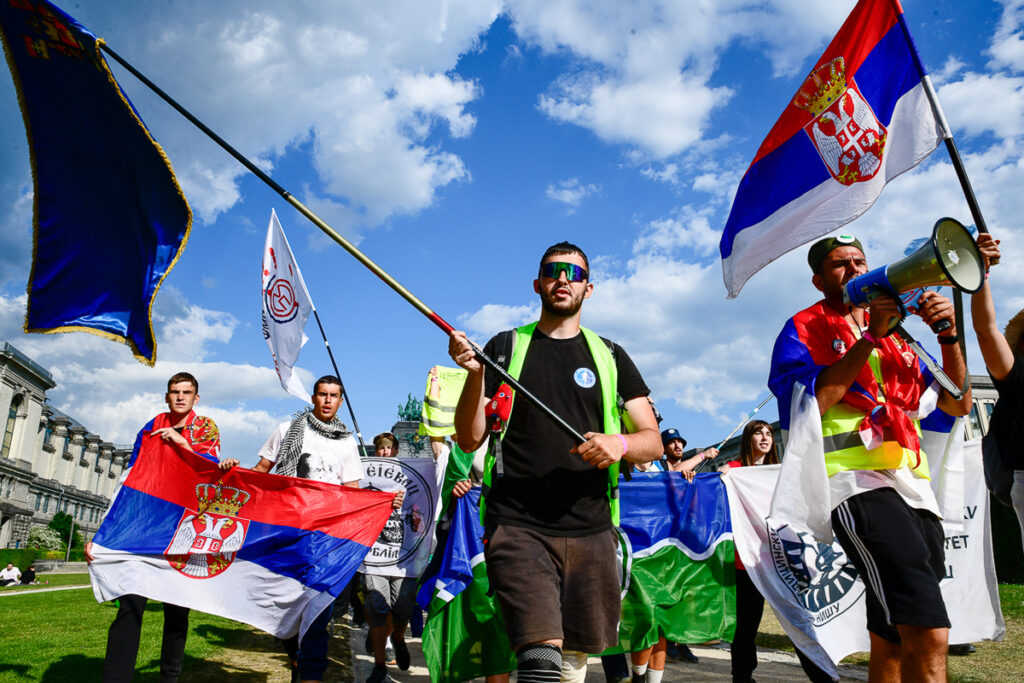
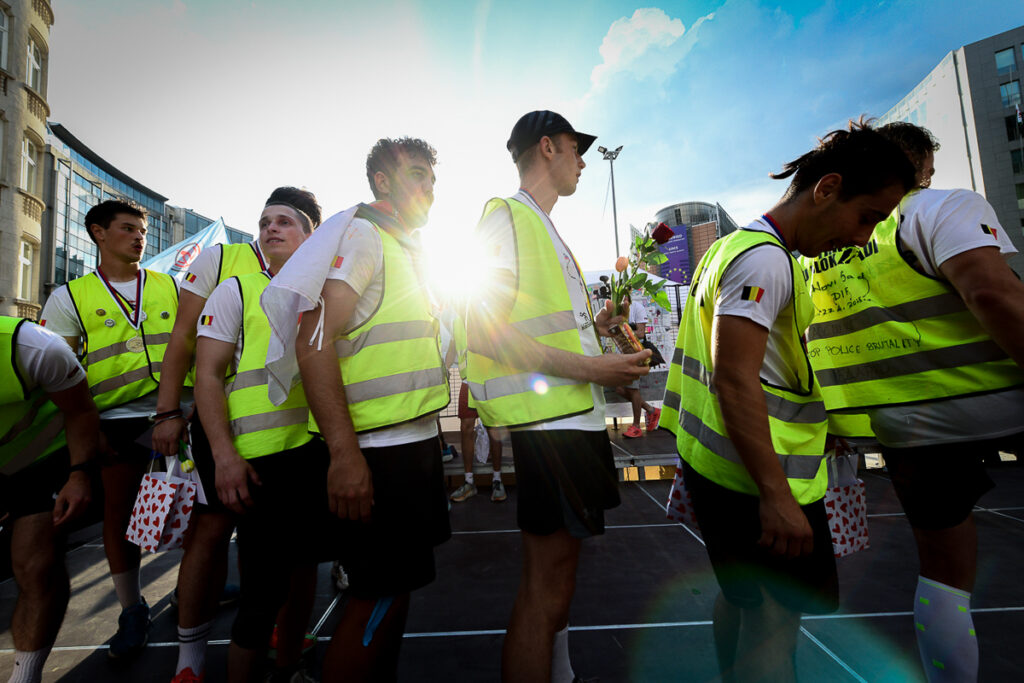
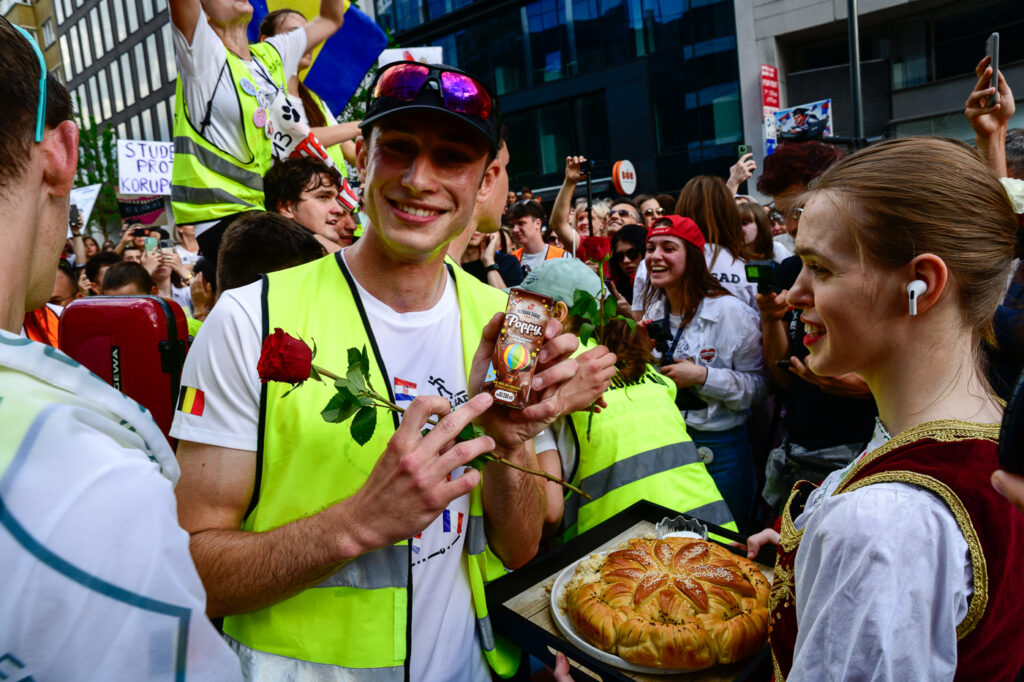
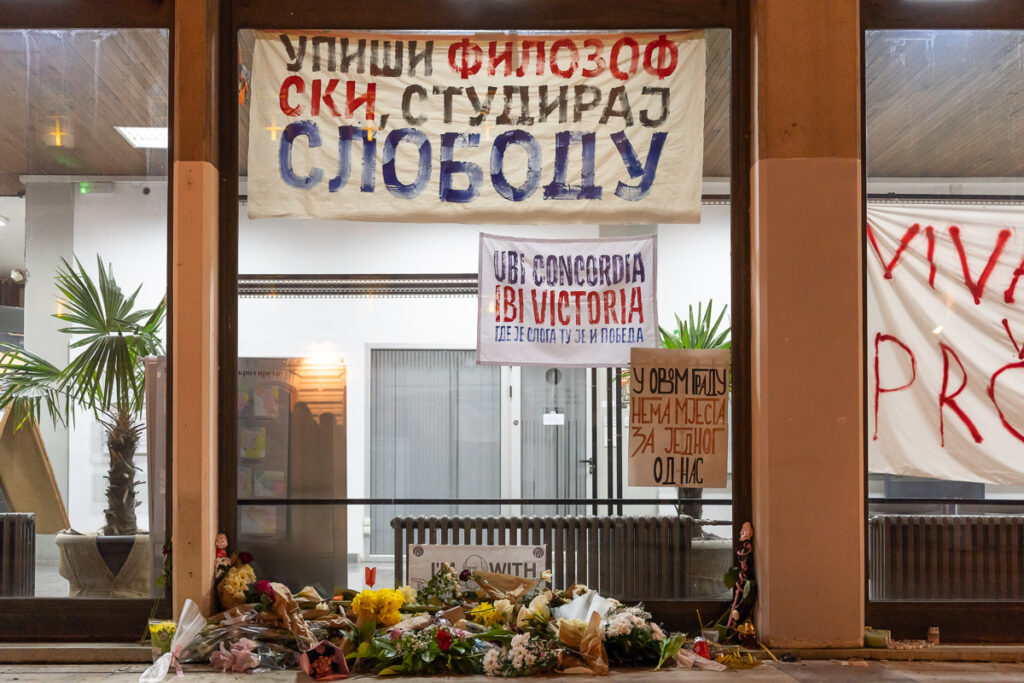
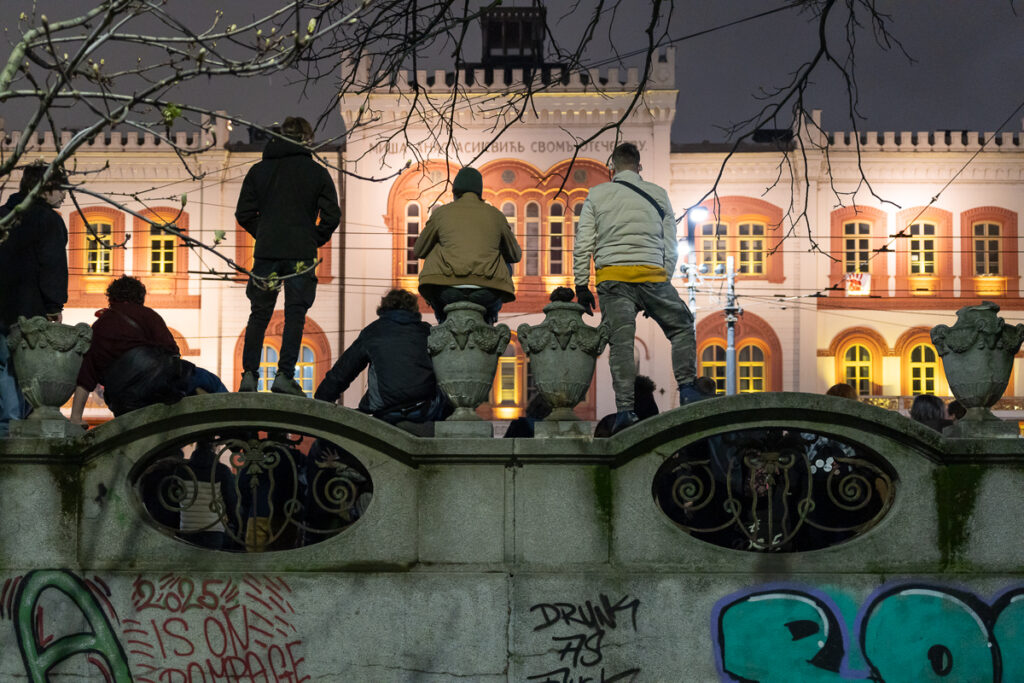
Palac Gore organized a welcome party in Brussels on 12 May 2025, for students ultra marathon runners from Belgrade (top row).
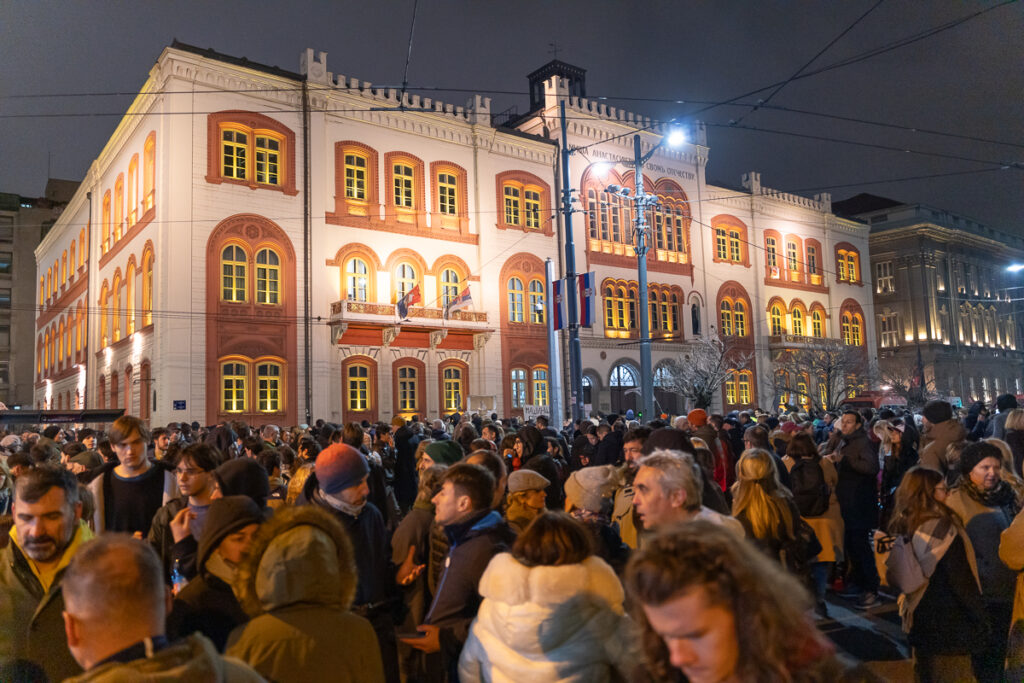
Protest in front of the Belgrade University Rectorate (31 March 2026). The protest (bottom row) was provoked by the police raiding the rector’s office, seizing computers, and detaining the rector for more than 10 hours. The pretext for the police action was the suicide of a female student a few days before.
Get Involved
Your history is our collective future. Here is how you can help.
The Archival Resistance Lab depends on a community of contributors, students, and activists. Whether you are in the Serbian diaspora or on the ground in Serbia, there are several ways to support the initiative:
Contribute Your Archives
Do you have private photographs, videos, or documents from the post-2003 era or the 1996–2000 protests? Your personal records can provide a vital counter-narrative to historical revisionism.
- Submit Your Media: Contact our curatorial team to discuss donating digital or physical copies.
- Provide Context: Help us identify the people, places, and stories behind the images to ensure their historical accuracy.
We are building a transnational bridge between students and citizens in Serbia and the diaspora.
- Research & Mapping: Assist in mapping “exiled” histories and spatial archiving projects.
- Civic Workshops: Participate in our “historical literacy” training sessions to prepare for the 2026-27 election cycle.
Support Our Interventions
Help us bring memory into the “concrete” spaces where it can drive accountability.
- Host a Projection: Help coordinate architectural projections of our archives in your city.
- Digital Advocacy: Share our digital toolkits and photo archives to combat state-sponsored revisionism online.
Partner with Us
We welcome collaborations with other transnational organizations, academic institutions, activist collectives and individual artists focused on transitional justice.
Contact Us
Ready to make a difference? We’d love to hear from you.
Email: hello@palacgore.com
Archival Resistance Lab Initiative coordinator – Miloje Savić
©Photographs and videos, 2024-2026, Miloje Savić. All Rights reserved (unless otherwise stated).